
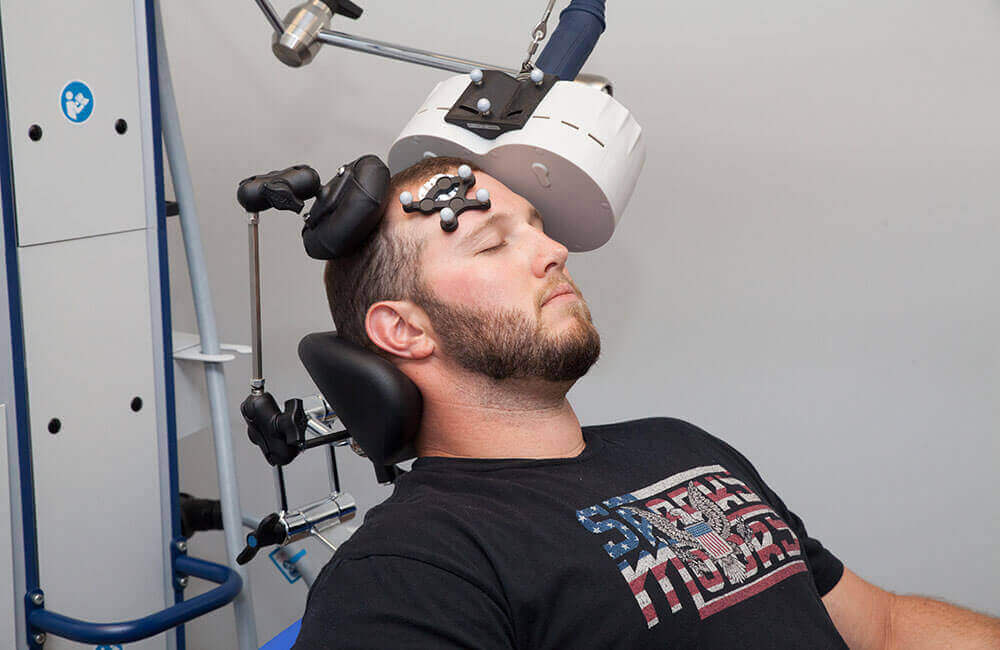
Transcranial Magnetic Stimulation (TMS) treats mental health conditions using magnetic pulses to stimulate targeted brain regions noninvasively. FDA approval is most commonly for depression and is often considered by individuals who do not respond well to either medication or talk therapy.
Table of Contents
The Science Behind TMS
How Magnetic Pulses Stimulate the Brain:
TMS utilizes the infusion of repeated magnetic pulses through an energized coil that is placed close to the head. The magnetic pulses generate a small electrical current designed to stimulate brain cells in areas of the brain that influence mood.
Brain Regions Targeted by TMS:
TMS typically focuses on the left side of the brain’s prefrontal cortex, which tends to be less active in people with depression. Stimulating this area can make the brain function closer to normal.
Conditions Treated with TMS Therapy
Major Depressive Disorder:
TMS is FDA-approved for individuals suffering from depression that has not responded to other therapies. Many patients see an improvement in their mood with TMS.
Anxiety Disorders:
Research shows that TMS may alleviate anxiety and panic attack symptoms, but researchers are still exploring TMS’s full potential.
The FDA has cleared TMS for obsessive-compulsive disorder (OCD), and research is promising with patients suffering from post-traumatic stress disorder (PTSD).
The TMS Therapy Procedure
Preparing for a Session
Before the treatment session, the physician will review the patient’s brain map and motor threshold in order to personalize settings.
What Happens During Treatment
During the session, the patient will sit in a chair, and a coil will deliver magnetic pulses for 20-40 minutes. Patients are typically awake and alert during the entirety of the session.
Post-Treatment Expectations
TMS does not require any recovery period. Most patients will return to their normal routine immediately after their session.
TMS Therapy Benefits
- Non-invasive and drug-free
- Side effects are mild compared to the side effects of medications
- Many patients go on to have long-term symptom relief
- TMS therapy can be combined with other treatments
Risks and Side Effects Of TMS Treatment
TMS therapy is typically safe and effective, although some mild side effects can occur:
- Mild scalp discomfort or headache.
- Tingling.
- Very rare (<0.1%) risk of experiencing a seizure.
Comparing TMS to Other Treatments
TMS versus Medications:
Unlike antidepressants that may cause systemic side effects that can include weight gain and fatigue, TMS targets a local area in the brain related to mood.
TMS versus Electroconvulsive Therapy (ECT):
ECT is very effective, but it has limiting factors such as memory loss, general anesthesia, and risk to safety. TMS is an outpatient procedure and is less invasive.
Who is a Good Candidate for TMS?
TMS is safe for:
- Adults with treatment-resistant depression.
- Patients who cannot tolerate the side effects of medication.
- Those interested in non-drug options.
Clinical Evidence and Efficacy Rates of TMS
Research suggests that 50–60% of patients will have a clinically significant improvement in symptoms, and about 30% will achieve full remission from the presenting symptoms following TMS therapy.
Cost and Access to TMS Therapy
While treatment can range from $6,000 to $12,000 for the course, many insurance companies are now covering TMS therapy for the approved uses. Access continues to improve across the United States and globally.
Conclusion
TMS is an innovative treatment for mental health concerns and represents new hope for patients with depression and other conditions. There is a significant amount of proof that TMS works, and side effects are few and far between. With TMS growing in availability, brain stimulation therapies represent a state-of-the-art approach to psychiatry. For additional information, you can visit the National Institute of Mental Health’s page on brain stimulation therapies.
FAQs
What is the duration of a TMS treatment course?
The average course lasts four (4) -six (6) weeks (5 sessions per week).
Will TMS therapy hurt?
No, most patients report it feels like mild tapping on the scalp.
Can I use TMS with medications?
Yes, many patients will use TMS in combination with their antidepressants for better results.
When should I expect results?
Some patients report improvements in symptoms after about 2 weeks; full course results are typically seen around 4-6 weeks.
Will TMS cure my depression forever?
Not each will be cured, but many will experience long-term relief – even up to one year or longer.
Is TMS FDA-approved?
Yes, TMS is FDA-approved for depression and OCD. Ongoing research and development is expanding into other carious mental illness applications.